
The story of the Porsche 911 Targa began in the mid-1960s. The model stood out thanks to its removable roof panel, distinctive roll hoop and panoramic rear window. The name “Targa” itself was inspired by the legendary Targa Florio race, where Porsche achieved many important victories.
The Targa was neither a typical coupé nor a classic cabriolet. It created its own category and, over time, became one of the most recognizable versions of the 911.
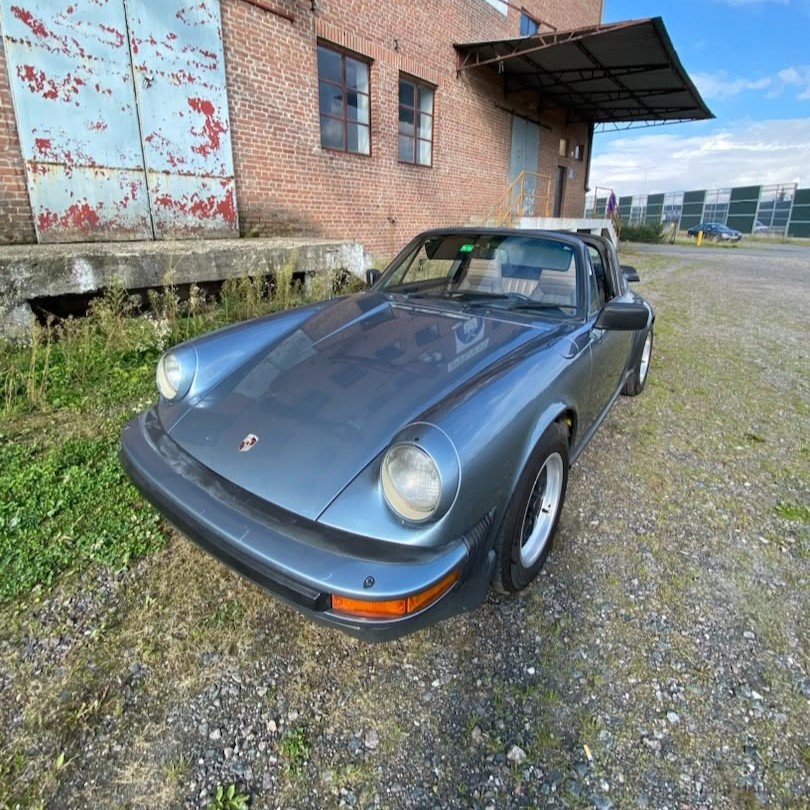
By 1987, it had already become a true icon. Behind the rear axle sat a 3.2-litre air-cooled flat-six, managed by the Bosch Motronic system. In European specification, it produced around 231 hp, delivering linear power, a distinctive sound and immediate throttle response.
It is a durable engine, but after so many years it deserves close attention. The most common areas to inspect are oil leaks, valve guides, the ignition system and the overall sealing and condition of the engine.
What about the suspension?
At the front, Porsche used MacPherson struts, while the rear featured independent trailing arms. Instead of conventional coil springs, the car relied on torsion bars working together with dampers and anti-roll bars.
This setup provides excellent road feel, but it also requires correct adjustment and all components to be in good condition. Worn bushings, dampers, ball joints, steering components or wheel bearings can cause the car to feel unsettled, follow ruts, or behave unpredictably in corners.
Because of the rear-engine layout, the front axle is relatively light. At higher speeds, the shape of the body can reduce front-end load even further, making the nose feel lighter and the steering less planted. That is exactly why proper wheel alignment, ride height and the condition of aerodynamic components are so important in a classic 911.
On a classic 911, simply fitting new dampers is often not enough – the suspension has to be treated as one complete system.
The Targa body is also slightly less rigid than the fixed-roof version. That is why it is especially important to inspect the sills, suspension mounting points, torsion bar tube, roof seals and roof mechanism.
Where does the name “Widowmaker” come from?
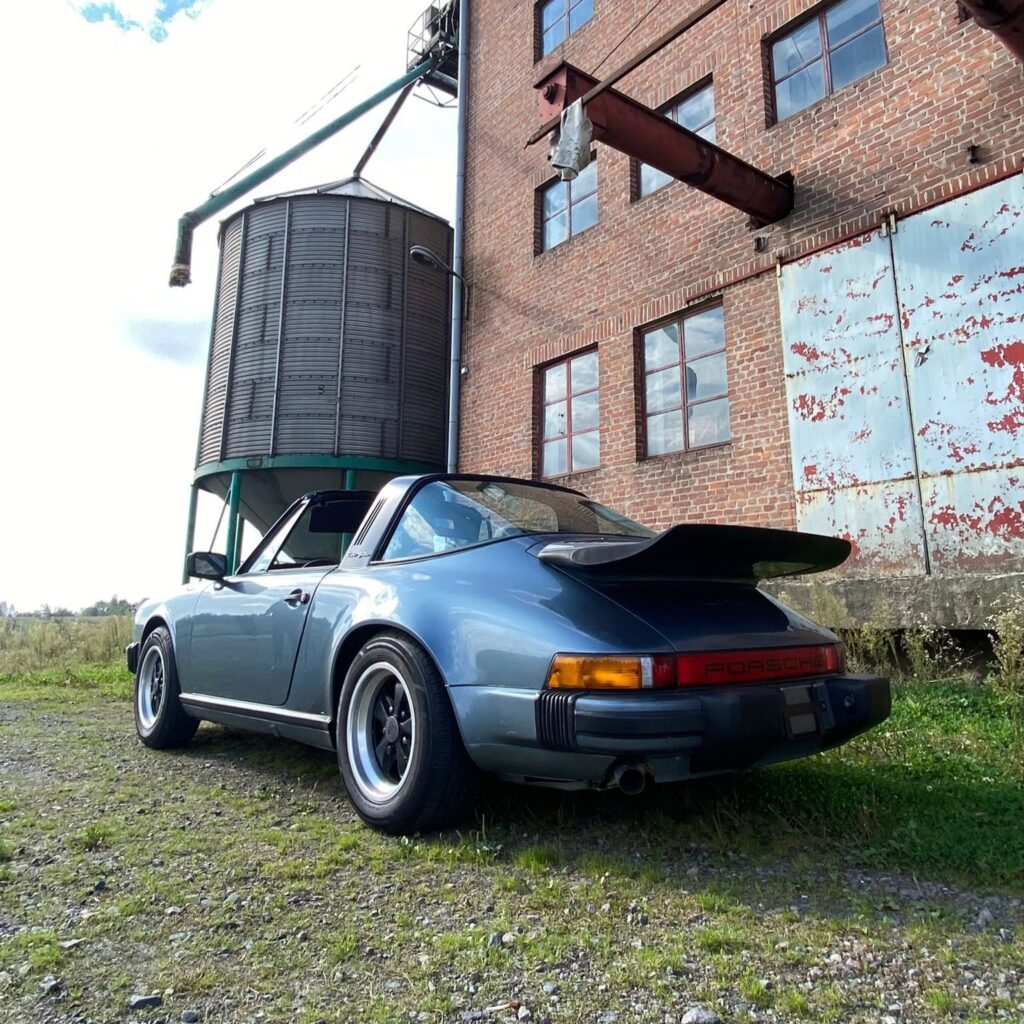
The nickname “Widowmaker” became associated with the most demanding Porsche 911s of that era.
That reputation came from the rear-engine layout, the unique weight distribution, the performance, and the lack of modern traction or stability control systems.
During fast cornering, suddenly lifting off the throttle can transfer weight to the front axle. The rear tyres may lose part of their grip, and the heavy rear of the car can begin to overtake the front.
That does not mean the classic Targa is impossible to control. It simply demands an aware driver, smooth steering and throttle inputs, and a properly set-up suspension.
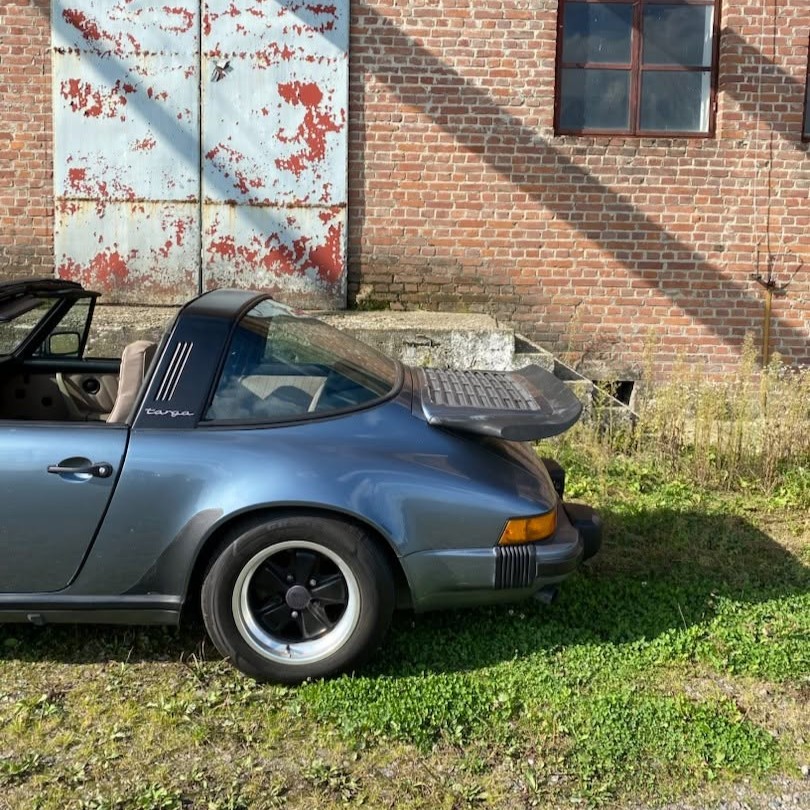
This is the Targa we have chosen as the base for our next project at Restomotive.
Our goal is not simply to restore the car. We want to preserve its authenticity and mechanical character, highlight its strongest qualities, improve its weaker points, and bring it back to a condition where every drive feels special again.
There is a lot of work ahead, along with interesting technical decisions and unexpected discoveries. Step by step, we will be sharing the entire process – from disassembly to the moment this air-cooled classic returns to the road.